
Company Formation in Oman: The Complete 2026 Guide (Costs, Steps & Foreign Ownership)
Everything investors ask about company formation in Oman — costs, 100% foreign ownership, free zones vs mainland, taxes, visas and Omanization — answered by AOWJ's Muscat advisors.
COMPANY FORMATION OMAN
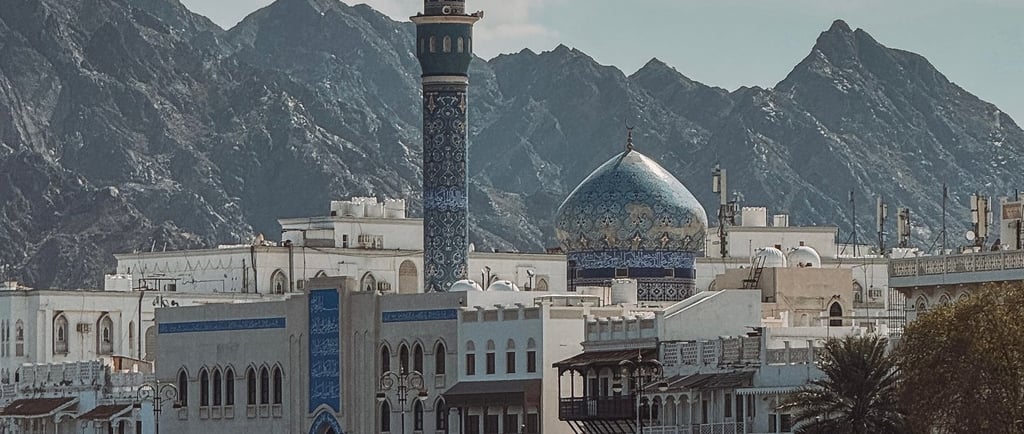

Company Formation in Oman: The Complete 2026 Guide (Costs, Steps & Foreign Ownership)
Thinking about company formation in Oman? You are in the right place. Oman has quietly become one of the most investor-friendly destinations in the GCC: 100% foreign ownership in most sectors, a corporate tax rate of just 15%, the region's lowest VAT at 5%, and no personal income tax for the vast majority of residents. Add politically stable governance, strategic ports outside the Strait of Hormuz, and the incentives of Oman Vision 2040, and the Sultanate makes a compelling case for your next venture.
In this guide, the advisors at AOWJ Business Consultancy in Muscat answer the questions investors ask us most — from real costs and timelines to free zones, visas, and Omanization — so you can set up your company in Oman with complete clarity.
Can a Foreigner Own 100% of a Company in Oman?
Yes. Under the Foreign Capital Investment Law (Royal Decree 50/2019), foreign investors can own 100% of an Omani company in most sectors — no local partner, no Omani sponsor, and no minimum capital barrier for most activities.
Only a short "negative list" of activities remains reserved for Omani nationals (certain trades such as tailoring, some transport and recruitment services, and specific retail activities). Practically everything else — trading, contracting, consulting, technology, manufacturing, logistics, e-commerce — is fully open to foreign investors of any nationality, including Indian, Pakistani, and other expatriate entrepreneurs already living in the Gulf.
GCC nationals enjoy even broader access and are treated like Omani citizens for most economic activities.
Types of Companies in Oman: Which Structure Should You Choose?
The main legal structures for business setup in Oman are:
Limited Liability Company (LLC) — the most popular choice. Requires two or more shareholders, offers limited liability, and suits partners or corporate shareholders.
Sole Proprietor Company (SPC) — identical protection to an LLC but owned by a single shareholder. The go-to structure for solo founders.
Free Zone Company (FZC) — registered in Sohar, Salalah, Duqm, or Knowledge Oasis Muscat, with long tax holidays and customs exemptions.
Branch of a Foreign Company — typically linked to a government contract; most foreign companies instead form a wholly-owned subsidiary LLC, which is faster and more flexible.
For most new investors, the practical decision comes down to SPC vs LLC (one owner or several) and mainland vs free zone — which we cover next.
Mainland vs Free Zone in Oman: What Is the Difference?
This is the single most important strategic decision in Omani company formation.
A mainland company registered with the Ministry of Commerce (MOCIIP) can trade anywhere in Oman, sell directly to local customers, and bid for government tenders. It pays the standard 15% corporate tax and 5% VAT.
A free zone company enjoys corporate tax exemptions of up to 25–30 years, zero customs duties on imports and re-exports, full profit repatriation, and reduced Omanization rates — but operates mainly within the zone and internationally. Goods sold into the mainland attract customs duty.
Which free zone is best in Oman?
Sohar Freezone — industry, steel, logistics, and port-linked trade; close to the UAE border.
Salalah Free Zone — manufacturing and Indian Ocean trade routes, with up to 30 years of tax exemption.
Duqm SEZ — heavy industry, petrochemicals, fisheries, and oil & gas, also with up to 30 years of exemption.
Knowledge Oasis Muscat (KOM) — technology and IT businesses near the capital.
The right answer depends on your customers: if you sell to the Omani market, go mainland; if you manufacture, re-export, or serve international clients, a free zone usually wins. Many of our clients at AOWJ operate both — a free zone entity for international trade alongside a mainland LLC for local sales.
How Much Does Company Formation in Oman Cost?
Government registration fees in Oman typically range from OMR 150 to OMR 600, depending on the company grade, activities, and Chamber of Commerce membership. On top of that, budget for:
Trade name reservation and notarization
Activity-specific ministry approvals (education, health, logistics, etc.)
Registered office lease and municipality attestation
Chamber of Commerce membership
Labour clearances, visa fees, and medical tests for staff
Professional fees if you use a consultancy
Free zone setups carry their own license and facility fees, which vary by zone and activity.
Minimum share capital: most activities have no mandatory minimum following the 2019 reforms. In practice, a declared capital of OMR 20,000 or more is commonly used for credibility, banking, and visa purposes — and a small set of regulated activities still prescribe capital requirements. Capital deposit certificates are no longer required for most LLC and SPC registrations.
Beware of "too cheap to be true" packages that quietly exclude approvals, office attestation, or visa costs. AOWJ provides a written, all-inclusive fee breakdown before you commit a single rial.
How Long Does Company Registration in Oman Take?
For a standard activity with documents ready, company formation in Oman takes 3 to 7 working days through the Oman Business Platform (business.gov.om). The process runs:
Trade name reservation — check and reserve your company name.
Constitutive contract — draft and sign the memorandum stating shareholders, capital, and activities.
Commercial Registration (CR) issuance — the official license that legally establishes your company.
Chamber of Commerce registration and municipality license.
Tax card and VAT registration with the Oman Tax Authority.
Bank account opening — typically 1–3 weeks including KYC.
Labour clearances and visas for the investor and staff.
Activities needing special ministry approvals can take 2–4 weeks, and free zone registrations generally run 1–3 weeks including license issuance and KYC verification on the platform.
You do not need to be in Oman for most of this: with a power of attorney, a licensed consultancy like AOWJ can complete the entire registration remotely.
What Documents Are Required?
For individual shareholders: passport copies, the reserved trade name, the constitutive contract, a registered office address, and any activity approvals. For corporate shareholders: the parent company's CR or certificate of incorporation, a board resolution approving the investment, and attested constitutional documents. All shareholders complete KYC verification on the Oman Business Platform.
Taxes in Oman: What Will Your Company Pay?
Oman's tax regime is one of the lightest in the region:
Corporate income tax: 15% of taxable profit, with a reduced 3% rate for qualifying small enterprises.
VAT: 5% — mandatory registration once annual taxable supplies exceed OMR 38,500 (voluntary from OMR 19,250).
Withholding tax: 10% on certain payments to foreign entities, such as royalties; WHT on dividends and interest is currently suspended.
Personal income tax: none today. A new law takes effect in January 2028, applying around 5% only on individual income above OMR 42,000 per year — leaving most residents entirely unaffected.
Free zone companies enjoy corporate tax holidays of up to 25 years (Sohar) and 30 years (Salalah, Duqm).
Corporate tax returns are filed within four months of the financial year end, and VAT returns quarterly. Every company must register with the Tax Authority after CR issuance — even small ones.
Visas, Omanization, and Hiring Staff
Once your CR is issued, you can apply for an investor visa — a renewable residency for foreign shareholders, with 5- and 10-year long-term options for larger investments. Investor visa holders meeting income criteria can sponsor their spouse and children.
To hire staff, your company obtains labour clearances from the Ministry of Labour followed by employment visas through the Royal Oman Police. Approval depends heavily on Omanization — Oman's national employment policy requiring a minimum percentage of Omani hires, which varies by sector and role. Getting your visa classes and Omanization ratio structured correctly from day one is one of the highest-value things a good advisor does for you.
Opening a Corporate Bank Account in Oman
Banks require the CR, constitutive contract, shareholder and signatory identification, and a shareholder or board resolution authorizing the account. KYC is conducted on all owners, and opening typically takes one to three weeks. Bank Muscat, NBO, Sohar International, Bank Dhofar, and OAB are the most common choices — the best fit depends on minimum balances, online banking quality, and your transaction profile.
Frequently Asked Questions
Can I start a business in Oman without living there? Yes. Through a power of attorney, your company can be incorporated remotely, and shareholders do not need Omani residency to own it. An investor visa can be obtained afterwards if you wish to relocate.
Do free zone companies need an Omani partner? No. Free zone companies in Sohar, Salalah, Duqm, and KOM can be 100% foreign-owned with no local partner or sponsor.
Does my company need an audit? Companies with share capital above OMR 50,000, and those meeting size thresholds, must have audited financial statements. Properly prepared accounts are also expected with tax filings.
Can I buy a ready-made company instead? Yes. Shelf companies with an existing CR can be purchased and transferred to you, saving setup time and providing an established registration date.
How do I close a company in Oman? Liquidation involves a shareholders' resolution, settling liabilities, Tax Authority clearance, closing the bank and labour files, and cancelling the CR — typically a 3–6 month process.
Start Your Company Formation in Oman with AOWJ
Company formation in Oman is straightforward when every step — name reservation, constitutive contract, CR, tax, banking, visas, and Omanization — is handled in the right order by people who deal with MOCIIP, the Tax Authority, the Ministry of Labour, and the free zones every single day.
That is exactly what AOWJ Business Consultancy does. From our base in Muscat, we have spent 15+ years forming and supporting companies across the Sultanate, with 89 specialized services covering everything from incorporation to audit.
Book your free consultation today — tell us your business activity, and within one business day you will have a clear plan, a transparent cost sheet, and a realistic timeline for your company in Oman.
AOWJ Business Consultancy · Muscat, Sultanate of Oman · info@aowjbusinessconsultant.com · +968 7627 0417
AOWJ Business Consultants
Sultanate Compliance & Capital Optimization
Sitemap
Home
About
Services
Blog
Contact
Muscat Office
Phone: 76270957
info@aowjbusinessconsultant.com
Muscat, Sultanate of Oman
(C) 2020 AOWJ Business Consultants-Sultanate compliance and capital optimization.