
Import and Export Business in Oman: The Complete 2026 Setup Guide
Start an import export business in Oman in 2026. Full guide to the import export license, customs code, Bayan system, costs, customs duty, free zones, and 100% foreign ownership.
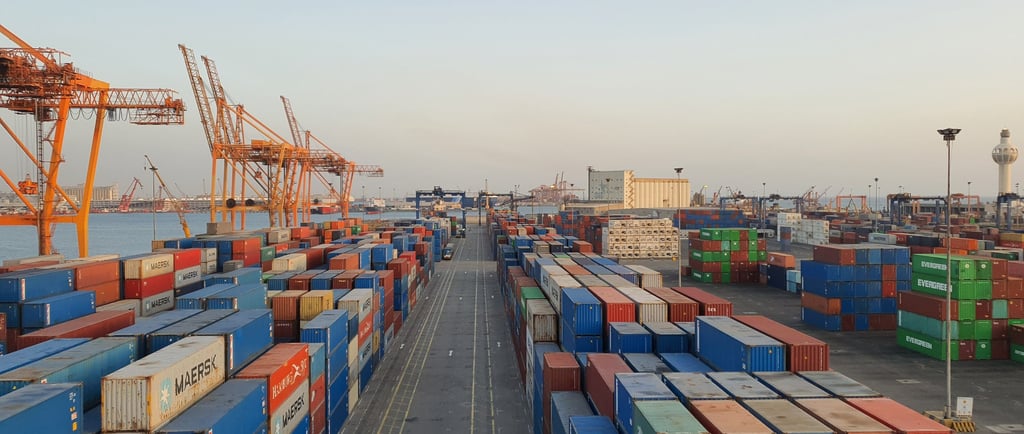
Oman has quietly become one of the best places in the Gulf to run an import export business. With deep-water ports on the Arabian Sea, a low-tax environment, and 100% foreign ownership in most sectors, the Sultanate is built for trade. If you are researching how to start an import export business in Oman, this comprehensive 2026 guide walks you through every step — the import export license in Oman, the customs code, the Bayan system, costs, duties, free zones, and the documents you need to clear goods.
Why start an import export business in Oman?
Investors searching for business setup in Oman for trading consistently come back to the same advantages:
Strategic location. Oman's main ports — Sohar, Salalah, and Duqm — sit on the Arabian Sea, outside the Strait of Hormuz, with direct access to Asia, Africa, and Europe.
100% foreign ownership. Under the Foreign Capital Investment Law, foreign investors can fully own a trading company in most activities — no local partner required.
Low tax. 5% VAT, no personal income tax, and 0% corporate tax for qualifying small companies (15% standard rate).
GCC customs union. Goods cleared in Oman can move duty-free across the GCC, and Oman's free trade agreements cut duties with several global partners.
Vision 2040. National policy actively prioritises logistics, manufacturing, and re-export, with strong port, road, rail, and airport infrastructure.
Import export license in Oman: what you actually need
To legally trade across Oman's borders, you need two separate approvals — this is the part most first-time investors miss:
An import export trade license issued by the Ministry of Commerce, Industry and Investment Promotion (MOCIIP) through the Invest Easy portal. This authorises your company to commercially import, export, or both.
A customs code registered with the Royal Oman Police – Directorate General of Customs. This unique code links your company to its declarations in the Bayan e-customs system. Without it, you cannot file a single import or export declaration.
You also register your Commercial Registration (CR) and join the Oman Chamber of Commerce and Industry (OCCI) as part of company formation.
Step-by-step: how to start an import export business in Oman
Choose your business activity and structure. Most traders set up a mainland LLC or a single-owner SPC, or a free zone trading license. We confirm your activity isn't on the restricted "negative list."
Reserve your trade name and obtain initial approval via the Invest Easy / Oman Business Platform.
Get your Commercial Registration (CR) and register with the Chamber of Commerce.
Apply for the import export trade license under the correct activity category.
Register your customs code with Oman Customs and activate your Bayan system account (typically issued within a few working days).
Open a corporate bank account and set up your VAT file.
Secure product-specific approvals if needed (food, pharma, cosmetics, etc.) and begin clearing shipments.
For most standard activities, the full setup can be completed in a matter of weeks once documents are notarised and attested.
Import export license cost in Oman
Costs depend on your activity and location, but as an indicative 2026 guide:
Import export trade license: roughly OMR 300 to OMR 1,500 per year, depending on activity category and jurisdiction.
Customs code registration: roughly OMR 100 to OMR 150.
Plus: Chamber of Commerce membership, municipality licence, office rent, bank charges, and professional/PRO fees.
Free zone trading licenses are priced differently and often bundle customs and tax benefits. We provide a fixed, itemised quote before you commit so there are no surprises.
Customs duty in Oman and the Bayan system
Oman applies the GCC Common External Tariff — a standard customs duty of 5% on most imported goods, with some categories zero-rated or exempt and a few subject to higher rates. Goods imported into free zones for re-export are generally exempt from duty.
Every declaration is filed electronically through the Bayan system, the Royal Oman Police customs platform. Two compliance points matter in 2026:
12-digit HS codes. Since January 2025, Oman uses the 12-digit GCC Unified Tariff classification. Getting the HS code right on your invoice is essential — a wrong code causes delays or quarantine.
Document accuracy. Your commercial invoice, certificate of origin, packing list, and bill of lading must match exactly. For many goods the commercial invoice must be attested by the Chamber of Commerce.
For registered low-risk importers, clearance is often completed within 24 to 48 hours.
Documents required to clear goods through Oman Customs
Commercial invoice (with the 12-digit HS code)
Certificate of origin
Packing list
Bill of lading or airway bill
Import/export license and customs code
Product-specific permits where required
Restricted and special-license goods
Certain goods need extra approvals before they can enter Oman:
Food products — health and SPS approval from the Ministry of Agriculture, Fisheries and Water Resources (MAFWR), plus Arabic labelling and shelf-life rules.
Pharmaceuticals and medical goods — Ministry of Health licensing.
Cosmetics and personal care — conformity certification and labelling compliance.
Alcohol, firearms, and explosives — special licenses and tight controls.
Confirming your product's approval pathway before you ship avoids the most common and costly mistakes.
Mainland vs free zone: which is better for trading?
Mainland trading company — lets you sell directly into the local Omani market across the whole country, ideal if your customers are inside Oman.
Free zone trading license (Sohar, Salalah, Duqm, Al Mazunah) — best for re-export, distribution, and warehousing, with duty exemptions, tax holidays, and 100% ownership. Selling free-zone goods into the Omani mainland means clearing customs and paying applicable duty.
Many trading businesses run a combination: a free zone base for re-export and a mainland CR for local distribution.
Importer of Record (IOR): testing Oman before incorporating
If you're a foreign supplier who wants to ship into Oman before setting up a company, an Importer of Record arrangement lets a licensed Omani company import on your behalf — handling the Bayan declaration, duty, and customs compliance while you keep commercial control of the goods. It's a practical way to test the market for one-off or trial shipments.
What Oman imports and exports
Understanding trade flows helps you spot opportunity. Oman is a major exporter of petroleum products, petrochemicals, metals, fish, dates, and minerals, and a steady importer of machinery, vehicles, foodstuffs, electronics, and consumer goods. The fastest-growing opportunities sit in logistics, re-export, food and FMCG distribution, building materials, and manufacturing inputs.
Why work with AOWJ Business Consultancy
Trade setup in Oman is where small errors get expensive — the wrong activity code, a missing customs code, a mismatched HS code, or an overlooked product approval can stall a shipment for weeks. AOWJ Business Consultancy is based in Muscat and handles the full setup for trading companies:
Company formation and trade license (mainland and free zone)
Customs code registration and Bayan system activation
Product approvals, PRO services, and visas
VAT, accounting, and ongoing compliance
We get your import export business in Oman trading quickly and correctly, so you can focus on the deals.
Ready to start your import export business in Oman? Contact AOWJ Business Consultancy for a free, no-obligation consultation and a fixed setup quote.
Frequently asked questions
What license do I need for an import export business in Oman? You need two things: an import export trade license from MOCIIP and a customs code registered with Oman Customs to file declarations through the Bayan system. Both are required to legally move commercial goods.
Can a foreigner own an import export company in Oman? Yes. Under the Foreign Capital Investment Law, foreign investors can own 100% of a trading company in most activities, with no Omani partner required. A short negative list of activities is reserved or restricted.
How much does an import export license in Oman cost? As an indicative guide, the trade license is roughly OMR 300 to OMR 1,500 per year depending on activity and location, plus around OMR 100 to OMR 150 for the customs code, and additional Chamber, municipality, and professional fees.
What is the customs duty in Oman? Oman applies the GCC Common External Tariff, with a standard customs duty of about 5% on most imported goods. Some goods are exempt or zero-rated, and goods imported into free zones for re-export are generally duty-free.
What is the Bayan system in Oman? Bayan is the Royal Oman Police e-customs platform used to file all import and export declarations electronically. You need a registered customs code to use it.
How long does it take to set up an import export business in Oman? For most standard activities, company formation and licensing can be completed in a few weeks once your documents are notarised and attested.
Which free zone is best for an import export business in Oman? It depends on your goods and routes: Sohar and Salalah are major ports suited to trade and re-export, Duqm suits heavy industry and logistics, and Al Mazunah supports cross-border trade. We match the zone to your business model.
AOWJ Business Consultants
Sultanate Compliance & Capital Optimization
Sitemap
Home
About
Services
Blog
Contact
Muscat Office
Phone: 76270957
info@aowjbusinessconsultant.com
Muscat, Sultanate of Oman
(C) 2020 AOWJ Business Consultants-Sultanate compliance and capital optimization.