
The Oman Business Market in 2026: Opportunities, Sectors, and How to Invest
A complete guide to the Oman business market in 2026: economy, top sectors, business opportunities, free zones, foreign investment rules, and how to set up. Built for investors.
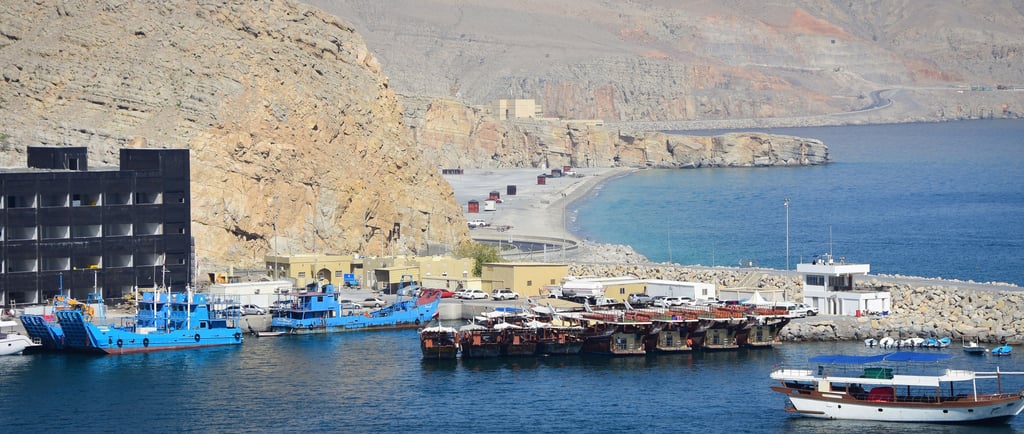
The Oman business market has quietly become one of the most attractive in the Gulf for foreign investors. With investment-grade credit ratings, a fast-diversifying economy, 100% foreign ownership, a US-dollar-pegged currency, and a strategic location outside the Strait of Hormuz, Oman offers stability and opportunity in equal measure. This comprehensive 2026 guide breaks down the economy, the highest-potential sectors, the real business opportunities in Oman, and exactly how to enter the market.
The Oman economy at a glance (2026)
After years of disciplined reform, the fundamentals of doing business in Oman look strong:
Steady growth. GDP is projected to grow by roughly 2.6%–4% in 2026, with the new Eleventh Five-Year Development Plan targeting around 4%.
Low inflation. Among the lowest in the region — generally below 1.5% — keeping costs predictable.
Falling debt. Public debt has dropped from over 68% of GDP in 2020 to around 35%, one of the sharpest improvements in the Gulf.
Investment-grade ratings. Moody's upgraded Oman to Baa3 and S&P holds BBB-, both with stable outlooks — a strong signal of confidence.
Rising foreign investment. FDI has grown by around 17.6% over five years, with the US, UAE, Kuwait, and China the largest investors.
A stable currency. The Omani Rial is pegged to the US Dollar, removing exchange-rate risk for international businesses.
Crucially, non-oil activity now accounts for more than 30% of GDP, proof that diversification is working rather than just being a slogan.
Why invest in Oman? The market advantages
Investors consistently point to the same set of reasons for choosing the Oman business market:
100% foreign ownership in most sectors under the Foreign Capital Investment Law, with no local partner and no minimum capital requirement.
Free repatriation of profits and capital — no restrictions on moving money out.
Low tax — 5% VAT, 0% corporate tax for qualifying small companies, 15% standard rate, and no personal income tax (a limited 5% tax on high earners above OMR 42,000 begins in 2028).
Strategic geography — ports on the Arabian Sea give direct access to Asia, Africa, and Europe without passing through the Strait of Hormuz.
Political stability and neutrality — known as the "Switzerland of the Gulf," Oman offers a calm, reliable operating environment.
Government-backed diversification — the Eleventh Five-Year Development Plan (2026–2030) channels around OMR 15.6 billion into priority sectors across 190 strategic programmes.
Key sectors and business opportunities in Oman
Oman Vision 2040 prioritises a clear set of high-growth sectors. These are where the strongest business opportunities in Oman sit in 2026.
1. Logistics and transport
Oman's geography is its superpower. The ports of Sohar, Salalah, and Duqm sit on global east–west shipping lanes, outside the Strait of Hormuz. Heavy investment in ports, free zones, airports, and projects like the Oman–UAE railway make logistics, warehousing, freight, and re-export among the most reliable opportunities in the market.
2. Manufacturing and industry
Manufacturing is a central pillar of diversification, supported by free zones and downstream industrial clusters. From building materials and food processing to chemicals and advanced manufacturing, the sector is expanding — recently underlined by a $1 billion lithium-ion battery materials plant in Sohar Free Zone. Investors benefit from competitive utility costs, ready industrial land, and customs incentives.
3. Renewable energy and green hydrogen
This is Oman's headline growth story. The country aims to lift renewables to 30% of power generation by 2030 (up from around 4% in 2024) and is positioning itself as a global leader in green hydrogen, with large-scale projects centred on Duqm and the south. For investors in clean energy, solar, wind, and hydrogen supply chains, Oman is one of the most ambitious markets in the region.
4. Tourism and hospitality
With mountains, beaches, wadis, heritage sites, and a safe, authentic character, tourism is a Vision 2040 priority. Opportunities span hotels, resorts, eco-tourism, adventure tourism, travel services, and Integrated Tourism Complexes that also allow foreign property ownership.
5. Energy and mining
Beyond oil and gas, mining is a fast-rising sector. Oman's mountain ranges hold world-class deposits of copper, gold, chromite, and gypsum, and the government aims to raise mining's GDP contribution from around 1.4% to 10% by 2040 — a major opening for investors in extraction, processing, and minerals trade.
6. Fisheries and agriculture
With a long coastline, fisheries are growing at near double-digit rates and are central to food security goals. Aquaculture, fish processing and value addition, agri-tech, and food production all offer room for new entrants.
7. ICT and the digital economy
Oman's ICT sector is expanding quickly, with thousands of registered tech companies and strong policy support for the digital economy. Software, fintech, e-commerce, digital services, and data infrastructure align directly with national priorities.
8. Pharmaceuticals and healthcare
A priority sector under Vision 2040, with opportunities in manufacturing, distribution, medical services, and health infrastructure as the population and standards of care grow.
Best business ideas for foreign investors and SMEs
If you're looking for practical entry points into the Oman business market, the most accessible opportunities in 2026 include:
Trading and distribution (import/export, FMCG, building materials)
Logistics and freight forwarding around the major ports
E-commerce and digital services
Tourism, hospitality, and travel services
Construction, contracting, and facilities management
Food processing and F&B
Consulting, professional, and corporate services
Renewable energy services and supply chains
Manufacturing and light industry in free zones
Free zones and special economic zones
Oman's free zones are a powerful way to enter the market, offering 100% foreign ownership, customs duty exemptions, and tax holidays:
Sohar Free Zone and Port — industry, logistics, and re-export, close to the UAE.
Salalah Free Zone and Port — a major global container hub on east–west routes.
Duqm Special Economic Zone (SEZAD) — a vast greenfield zone for heavy industry, petrochemicals, and logistics.
Al Mazunah Free Zone — geared toward cross-border trade.
Al Dhahirah Free Zone / Al-Rawdah SEZ — newer zones positioned at the Saudi border crossing.
Free zones suit trade, manufacturing, and re-export businesses, while a mainland company is best when you want to sell directly into the local Omani market.
Vision 2040 and the Eleventh Five-Year Plan
The Oman business market is shaped by a clear national roadmap. Vision 2040 aims to build a diversified, knowledge-based, globally integrated economy, and the Eleventh Five-Year Development Plan (2026–2030) is its second execution phase — targeting around 4% growth, channelling roughly OMR 15.6 billion of investment, and prioritising manufacturing, logistics, renewable energy, mining, tourism, fisheries, and the digital economy. For investors, this means government priorities, incentives, and capital are pointing in a predictable direction — a major advantage when planning long-term.
How to enter the Oman business market
Choose your activity and sector, and confirm it qualifies for 100% foreign ownership (most do; a short negative list does not).
Pick your structure — mainland LLC/SPC for the local market, or a free zone entity for trade and re-export.
Reserve your trade name and obtain your Commercial Registration (CR) via the Invest Easy / Oman Business Platform.
Join the Chamber of Commerce and complete tax, VAT, and labour registrations.
Open a corporate bank account and secure any sector-specific licences.
Plan Omanisation and visas for your workforce.
For most activities, a company can be set up and trading within a matter of weeks once documents are ready.
Why work with AOWJ Business Consultancy
Entering a new market is where local knowledge pays for itself — the right activity code, the right structure, the right zone, and clean compliance from day one. AOWJ Business Consultancy is based in Muscat and helps foreign investors enter the Oman business market end to end:
Market entry strategy and activity selection
Company formation (mainland and free zone)
PRO services, visas, and Omanisation compliance
VAT, tax, accounting, and audit coordination
Ongoing compliance and business support
We handle the Omani side so you can focus on the opportunity.
Ready to enter the Oman business market? Contact AOWJ Business Consultancy for a free, no-obligation consultation and a clear roadmap for your investment.
Frequently asked questions
Is Oman a good place to do business? Yes. Oman offers 100% foreign ownership, low taxes, a stable US-dollar-pegged currency, investment-grade credit ratings, and a strategic location outside the Strait of Hormuz, making it one of the more attractive Gulf markets for foreign investors.
What are the best sectors to invest in Oman? Logistics, manufacturing, renewable energy and green hydrogen, tourism, mining, fisheries and agriculture, ICT, and pharmaceuticals are the priority sectors under Vision 2040.
Can foreigners own 100% of a business in Oman? Yes. Under the Foreign Capital Investment Law, foreign investors can own 100% of a company in most sectors, with no local partner and no minimum capital requirement.
What taxes apply to businesses in Oman? The standard corporate tax rate is 15%, with 0% for qualifying small companies, and VAT is 5%. There is currently no personal income tax, though a limited 5% tax on high earners above OMR 42,000 begins in 2028.
How fast is the Oman economy growing? Projections for 2026 range from around 2.6% to 4%, with the Eleventh Five-Year Development Plan targeting approximately 4% and inflation staying low.
What is the difference between a mainland and free zone company in Oman? A mainland company can trade directly across the local Omani market, while a free zone company offers 100% ownership, customs, and tax incentives, best suited to trade, manufacturing, and re-export.
How do I start a business in Oman? Choose your activity and structure, reserve a trade name, obtain your Commercial Registration via the Invest Easy platform, join the Chamber of Commerce, complete tax and labour registrations, and open a corporate bank account — a process we manage end to end.
AOWJ Business Consultants
Sultanate Compliance & Capital Optimization
Sitemap
Home
About
Services
Blog
Contact
Muscat Office
Phone: 76270957
info@aowjbusinessconsultant.com
Muscat, Sultanate of Oman
(C) 2020 AOWJ Business Consultants-Sultanate compliance and capital optimization.